Loch Ness feels different to other lochs. The water looks darker, the hills sit closer, and the calm stretches on longer than you expect. It is a place that invites stories, and it is easy to see why generations of locals and visitors have been drawn in by the mystery.
Where the legend begins (St Columba)
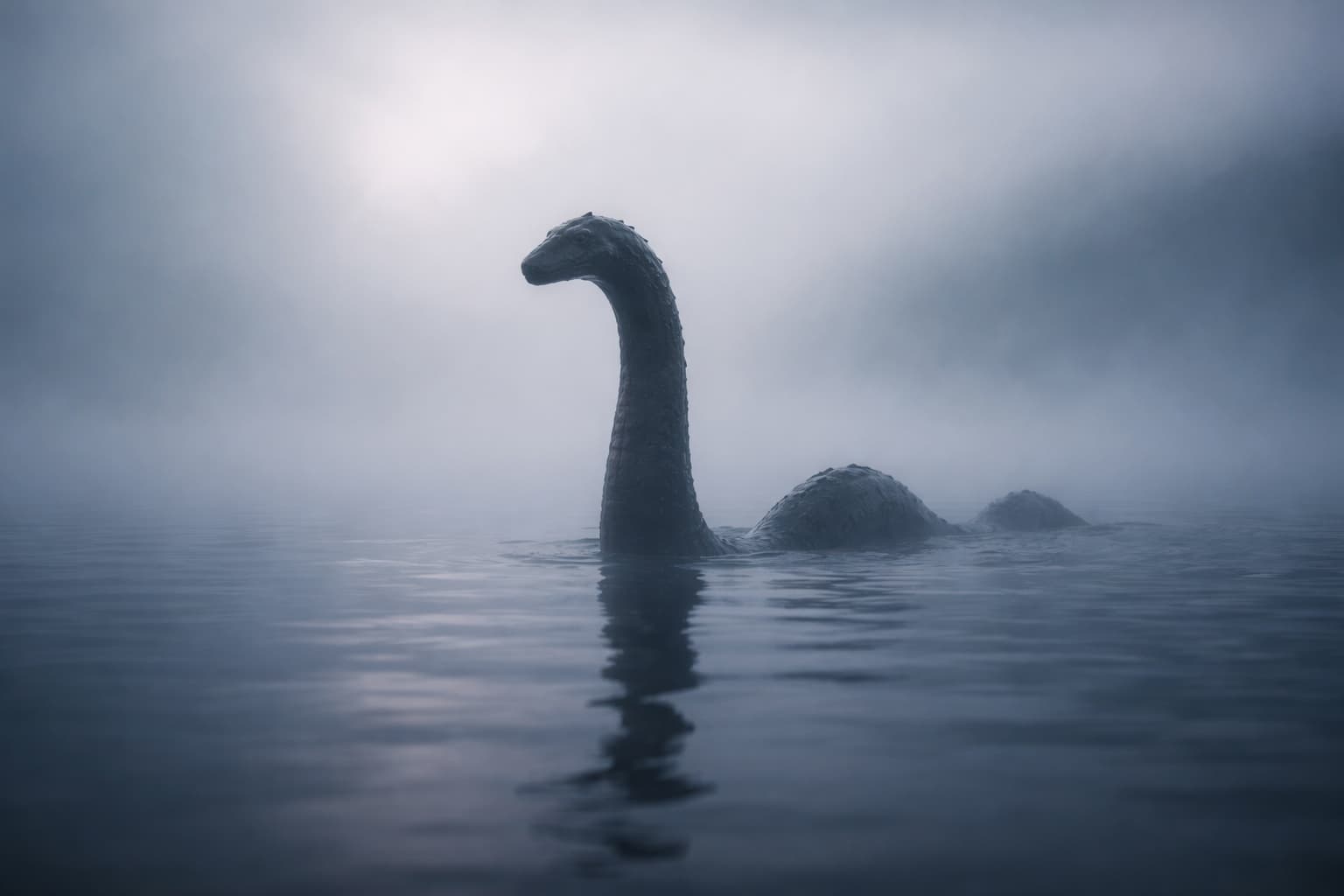
The earliest story linked to Loch Ness comes from the 6th century and St Columba. The tale describes a water beast near the River Ness and the loch, and it is best read as legend and local history rather than proof. Still, it is the seed that later stories grow from, and it adds a sense of depth to the modern myth.
How Nessie became world famous
Local reports in the early 1900s began to bring new attention to the loch. By the 1930s, newspapers helped launch what many now call the modern Nessie era. The stories spread quickly and the loch became part of global folklore, even for those who have never visited the Highlands.
Loch Ness facts that make the legend believable
Loch Ness is long and deep, with dark peaty water that limits visibility. It is around 23 miles or 37 kilometres in length, and its depth reaches roughly 230 metres, about 750 feet. It is often said that the loch holds more water than all the lakes in England and Wales combined, which gives a sense of scale even if the comparison is a generalised way of speaking.
This scale is one reason sonar and scanning became part of the story. It is a loch where things can hide, where shadows can look strange, and where technology always seems like it might reveal something new.
Explorations and searches for the Loch Ness Monster
There have been decades of organised interest. The Loch Ness Investigation Bureau led searches in the mid 1900s, and later decades brought sonar and underwater camera attempts. Modern exploration now includes boats with advanced sonar, drones, and scanning projects that map the loch in fine detail.
The Loch Ness Centre in Drumnadrochit brings these stories together. It combines legend with exploration and offers visitors a way to see how science and storytelling sit side by side at the loch.
Captain Cobb and the deep diving story
Racing driver John Cobb came to Loch Ness in 1952 to attempt the water speed record in a jet‑powered craft called Crusader. The record at the time was held by American Stanley Sayres at 178.4 mph. Cobb was killed on the loch during his record attempt, which adds a sobering chapter to the loch’s history. His story is a reminder that Loch Ness has drawn explorers and risk‑takers for reasons beyond the legend itself.
The clans and history around Loch Ness
The Great Glen is layered with clan history. Urquhart Castle sits in a strategic position and is linked to the wider story of the Highlands. Clan Grant is closely associated with the area around Urquhart and Strathspey influence reaches into the region. Clan Fraser has a strong presence in Inverness-shire, while Clan MacDonald of Glengarry is part of the Great Glen story. Clan Mackintosh and the wider Culloden and Inverness area add another layer of history nearby.
Best places to feel the Loch Ness story in real life
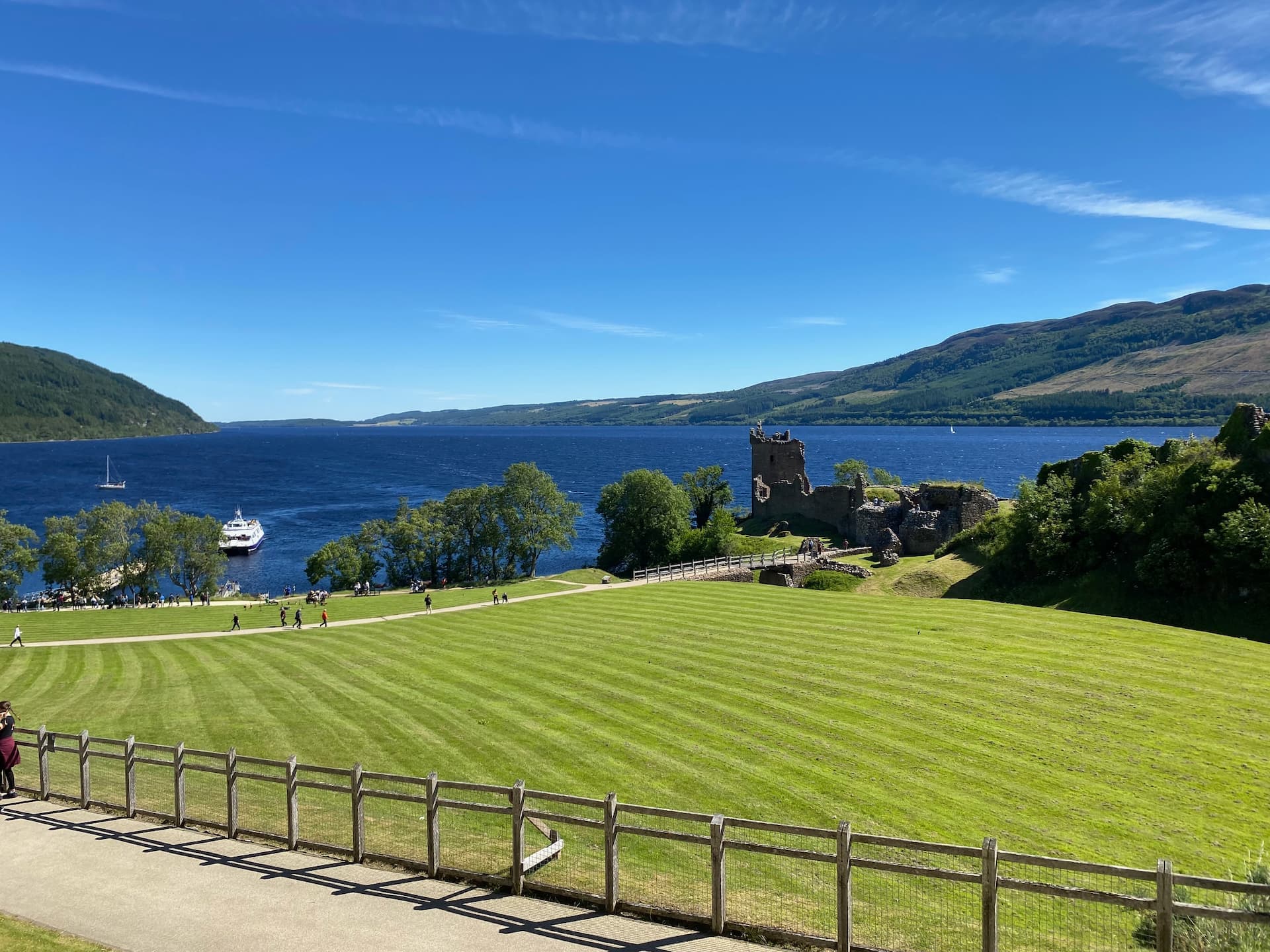
The best stops balance history, scenery, and quiet atmosphere. Urquhart Castle is a key stop, with views across the loch. Falls of Foyers is dramatic in wet weather, and Dores Beach offers a calm shoreline. Fort Augustus is a good optional stop if timing allows, and Invermoriston is a lovely quiet viewpoint. Some of the most memorable moments come from woodland roads and small pull ins away from crowds.
Private boat trips can be arranged in advance if you want to see the loch from the water. For touring, see our Loch Ness tour from Inverness or the Loch Ness and Highlands tour.
Experience Loch Ness properly, with a local driver-guide
If you want the best Loch Ness day without the stress, we’ll tailor the route around your pace, interests, and the best viewpoints on the day.
Myths, legends and Highland folklore near Loch Ness
Nessie sits alongside older Highland folklore. Stories of kelpies and water horses are common in the Highlands, and the Cailleach is a powerful figure in local tradition. Fairy hills and otherworld tales are part of the wider landscape, and old Highland roads are often tied to ghost stories and memory. The loch feels like the natural home for all of it.
Conclusion
Loch Ness is a place where legend meets landscape. Whether you come for Nessie, history, castles, or scenery, it delivers. If you want to plan a day with a local guide, explore Loch Ness tour from Inverness, browse private tours from Inverness, or request a quote. For everything else to see and do around the loch – Urquhart Castle, boat cruises, walks, and more – see our complete Loch Ness visitor guide.
FAQ
What is the origin of the Loch Ness Monster legend?
The earliest story is linked to St Columba in the 6th century, describing a water beast near the River Ness and Loch Ness area. It is best understood as legend tied to local history.
How deep is Loch Ness?
Loch Ness reaches around 230 metres in depth and is often described as one of the deepest lochs in Scotland.
When did Nessie become famous?
Reports from local residents grew in the early 1900s, and media coverage in the 1930s helped establish the modern Nessie era.
Have there been real explorations of Loch Ness?
Yes. There have been decades of organised searches, sonar scans, and underwater camera attempts, with modern technology continuing the exploration story.
What is the Loch Ness Centre in Drumnadrochit?
It is a visitor centre that explores the legend, science, and history of Loch Ness, including modern scanning projects and research.
Who was Captain Cobb and what was his connection to Loch Ness?
Captain George “Blondie” Cobb was involved in early deep diving efforts on Loch Ness, showing how the loch attracted explorers and inventors as well as monster hunters.
What are the best places to visit on Loch Ness?
Popular stops include Urquhart Castle, Falls of Foyers, Dores Beach, Invermoriston, and quiet viewpoints away from the busiest spots.
Can Venture Highland include storytelling and folklore on a private tour?
Yes. We can weave local stories, clans, and folklore into a calm, private day around the loch.